Plumbers vs Gas Fitters: What's the Difference and Who Do You Need?
You have a leaking pipe under the kitchen sink and a gas cooktop that will not light properly, both on the same renovation list. Do you call one tradesperson or two? It is a more common question than most homeowners expect, because plumbing and gas fitting look like they should be the same job to anyone outside the trades, yet in NSW they are two separate licensed trades with two separate qualifications, and mixing them up can leave you with an uninsured, non-compliant job.
Understanding the actual difference matters for more than curiosity. It affects who you are legally allowed to hire for a given task, whether the finished work will be backed by a compliance certificate, and whether your home insurance would actually pay out if something went wrong with unlicensed work down the track. This is especially relevant on the Central Coast, where renovations often touch both water and gas systems in the same kitchen or bathroom.
Here is a clear breakdown of what each trade legally covers, why the boundary between them exists, and how to work out exactly who to call for your next job.
1. Two Different Trades, One Common Confusion
Plumbing and gas fitting sit under different qualifications in Australia, and neither trade automatically includes the other. A plumber is licensed to work on water supply, drainage, sanitary systems and stormwater. A gas fitter is licensed to install, alter, repair and test gas appliances and gas pipework. They are related trades that often show up on the same job site, particularly for hot water systems that involve both a water connection and a gas line, but the licences behind them are entirely separate.
The confusion is understandable. Many tradespeople, including much of the team at Eagle Service Solutions, hold licences in both trades and can legally do either job. But holding one licence does not automatically grant the other, and a plumber who has not completed the additional gas fitting qualification is not legally permitted to touch your gas line, no matter how confident they sound.
This distinction is written into NSW law specifically to prevent unqualified work on gas systems, which carry a higher safety risk than most plumbing tasks. A mistake in a water pipe usually means a leak. A mistake in a gas line can mean a carbon monoxide risk or an explosion risk, and that is precisely why the two trades are licensed and regulated separately rather than treated as one combined skill set.
2. What a Licensed Plumber Is Qualified to Do
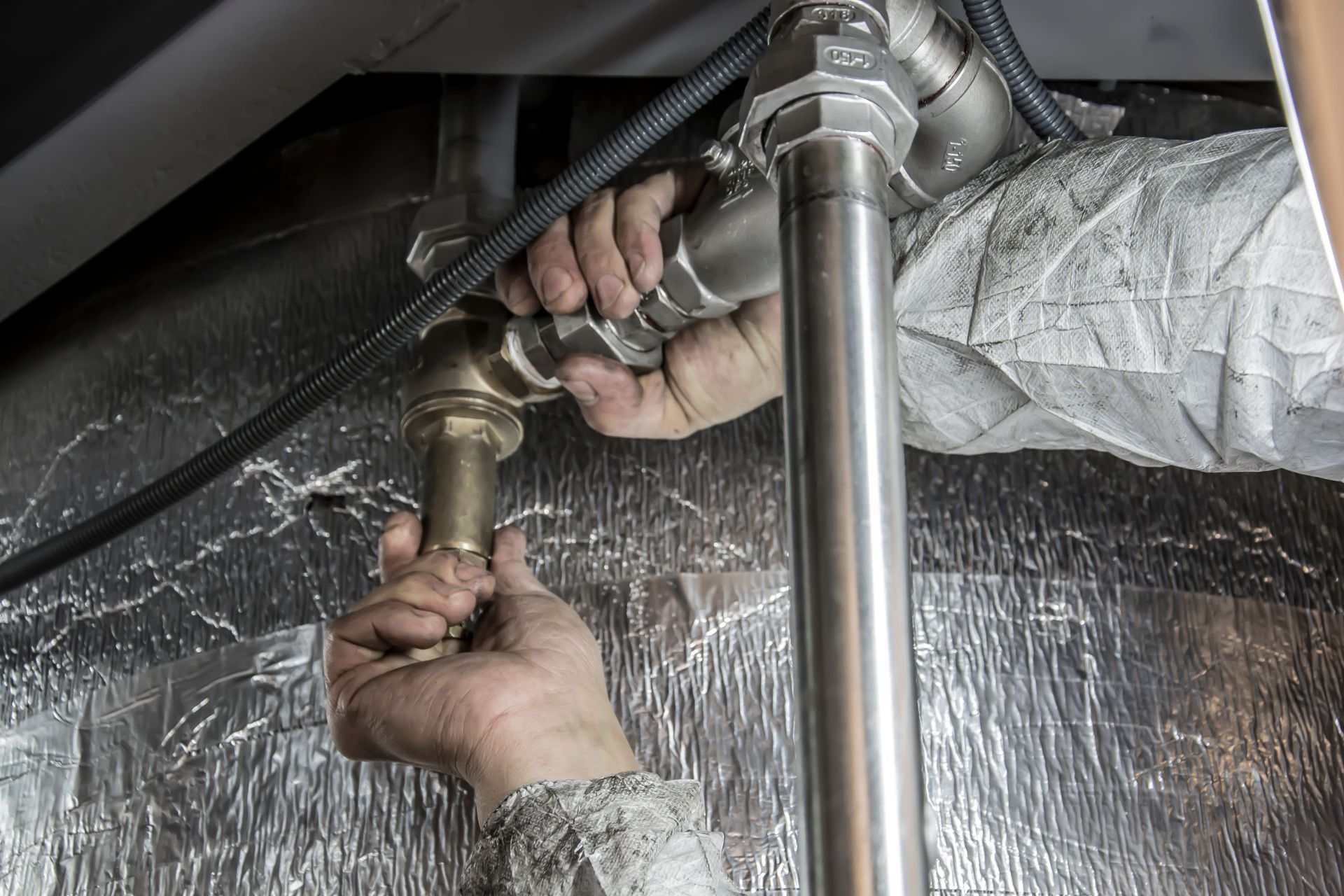
Plumbing work covers anything relating to water supply, drainage and sanitary plumbing, which in practice means tasks like fixing leaking taps, clearing blocked drains, installing or repairing hot and cold water pipework, fitting new bathroom and kitchen fixtures, stormwater drainage, and pipe relining. It is a broad trade that touches almost every part of a home's water system.
Becoming a licensed plumber in Australia typically involves a four-year apprenticeship combined with a Certificate III in Plumbing, followed by the relevant state licensing exam. It is a substantial qualification, and it is the reason a licensed plumber can be trusted with jobs ranging from a simple tap washer replacement through to a full bathroom renovation or a stormwater drainage upgrade.
Crucially, a plumbing licence on its own does not cover gas work. A plumber without additional gas fitting credentials is not permitted to install or repair a gas cooktop, gas hot water unit or gas heater, even though the physical skills involved might look similar to what they do every day. This is the exact point where homeowners most often assume, wrongly, that any qualified tradesperson can handle any pipe in the house.
3. What a Licensed Gas Fitter Is Qualified to Do
Gas fitting covers the installation, alteration, repair and testing of gas appliances, gas meters, regulators and the pipework that carries gas through a property. That includes cooktops, ovens, gas hot water systems, gas heaters, gas log fires and outdoor BBQ points. Every job needs to meet AS/NZS 5601, the Australian standard covering gas installation safety, pipe sizing, appliance clearances and ventilation.
The qualification path is a Certificate III in Gasfitting, and the licence it produces is specific to gas work. Legally, a gas fitter without a plumbing licence cannot carry out plumbing duties, just as a plumber cannot legally carry out gas fitting duties without the matching qualification. The two licences are genuinely separate credentials, not two labels for the same skill set.
What this means practically is that a gas fitter is the right call for anything involving a gas appliance, a gas leak, a new gas connection, or converting an appliance between natural gas and bottled LPG. If the job involves anything that burns or carries gas, you need someone holding a current gas fitting licence, full stop.
4. Why the Boundary Is Enforced So Strictly
NSW Fair Trading and Building Commission NSW treat unlicensed gas work as a serious compliance issue, not a technicality. Gas faults carry a higher consequence than most plumbing faults, including carbon monoxide poisoning from poor combustion or ventilation, and fire or explosion risk from a leaking connection. That risk profile is exactly why the licensing framework keeps gas fitting as a distinct, tightly regulated qualification rather than folding it into the broader plumbing licence.
There are practical consequences for homeowners too. Using an unlicensed or wrongly licensed tradesperson for gas work can void your home insurance in the event of a gas-related incident, and it can also void manufacturer warranties on the appliance itself. Insurers and manufacturers both typically ask for evidence of a compliant, licensed installation before they will honour a claim.
With home insurance premiums having risen sharply across NSW in recent years, this is not a small consideration. A compliance certificate from a properly licensed gas fitter is one of the cheapest forms of protection a homeowner can have, and it costs nothing beyond hiring the right person for the job in the first place.
5. When a Job Needs Both Trades at Once
Plenty of common Central Coast renovations genuinely need both a plumber and a gas fitter, and the good news is that a single provider like Eagle Service Solutions can often supply both from one team. A gas hot water system replacement is the clearest example: it typically involves plumbing work to connect the water inlet and outlet, and gas fitting work to connect and test the gas supply and flue.
Kitchen renovations are another common overlap. Moving a sink usually needs a plumber, while relocating a gas cooktop needs a gas fitter, and both jobs might be happening in the same wall cavity during the same week of work. Coordinating both trades through one company avoids the scheduling headache of managing two separate contractors on the same job site.
Some tradespeople hold both licences after completing additional supervised experience and a Certificate IV in Plumbing on top of their original qualification, which allows them to legally carry out both plumbing and gas fitting work personally. This is worth asking about directly, since it can simplify a renovation that touches both systems.
Have you checked whether your next renovation actually needs one trade or both? It is a five-minute question to ask a prospective tradesperson before booking, and it avoids the awkward discovery mid-job that the person on site cannot legally finish half the work.
6. How to Confirm Who You Are Actually Hiring
Before any plumbing or gas fitting work begins, ask to see the specific licence relevant to the job, not just a general trade licence or an ABN. A plumbing licence and a gas fitting licence are numbered separately, and a legitimate tradesperson will have no issue showing you the correct one or letting you check it against the NSW Fair Trading public register.
For gas work specifically, always ask for a compliance certificate once the job is finished. This document confirms the installation meets AS/NZS 5601 and is your record if you ever need to make an insurance claim or sell the property. A reluctance to provide one is a clear warning sign.
Eagle Service Solutions holds both plumbing and gas fitting licences across its Central Coast team, covering everything from blocked drains and hot water systems through to gas installations and emergency leak repairs. Whatever the job, the right licensed trade is matched to the work before anyone picks up a tool.
If you are not sure whether your next job needs a plumber, a gas fitter, or both, get in touch and describe what you are dealing with. A quick conversation upfront is the easiest way to make sure the right licensed professional turns up the first time.